Más artículos de Loop Engineering:
Servicios: el nuevo software que ya está acá
Por Julien Bek (@julienbek) — Sequoia Capital
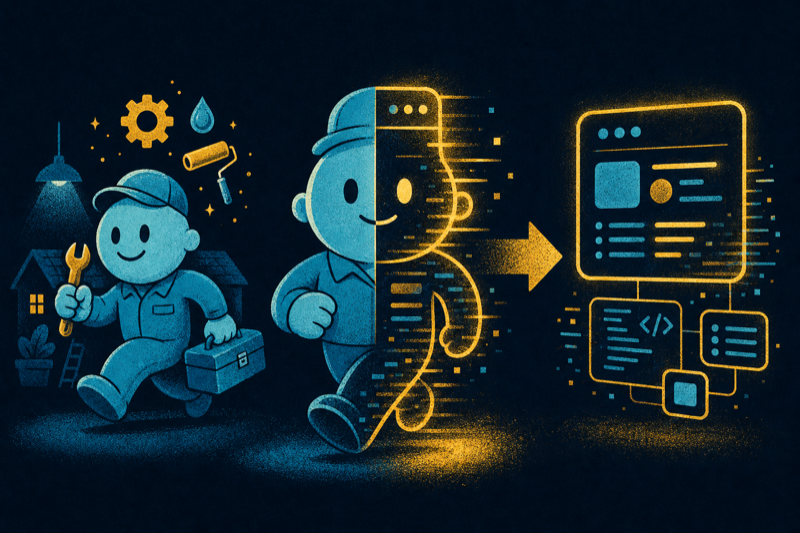

La próxima empresa de un billón de dólares va a ser una empresa de software disfrazada de firma de servicios.
Todo founder que está construyendo una herramienta de IA se hace la misma pregunta: ¿qué pasa cuando la próxima versión de Claude convierte a mi producto en una feature? Tienen razón en preocuparse. Si vendés la herramienta, estás en una carrera contra el modelo. Pero si vendés el trabajo, cada mejora del modelo hace tu servicio más rápido, más barato y más difícil de competir.
Una empresa puede gastar 10 mil dólares por año en QuickBooks y 120 mil en un contador que le cierre los libros. La próxima empresa legendaria directamente va a cerrar los libros.
Escribir código es, en su mayoría, inteligencia. Saber qué construir después es criterio. Traducir una especificación a código, testear, debuggear: las reglas son complejas, pero son reglas. El criterio es distinto. Requiere experiencia y gusto, instinto construido con años de práctica. Decidir qué feature construir después, si tomar deuda técnica, cuándo publicar antes de que esté listo. Hace un año, la mayoría de los usuarios de Cursor trataban a la IA como autocompletado. Hoy, más tareas son iniciadas por agentes que por humanos. La ingeniería de software representa más de la mitad de todo el uso de herramientas de IA entre profesiones. Cada otra categoría sigue en un solo dígito. La razón: la ingeniería de software es principalmente trabajo de inteligencia. La IA cruzó el umbral donde puede hacer la mayor parte del trabajo de inteligencia de forma autónoma y dejarle el criterio a los humanos. La ingeniería de software llegó primero. Le está pasando a todas las profesiones.
Un copiloto vende la herramienta. Un autopiloto vende el trabajo. Hasta hace poco, los modelos de IA todavía estaban desarrollando inteligencia y criterio, así que el enfoque correcto era construir un copiloto primero: poner la IA en manos de un profesional y dejarle decidir qué hacer con ella. Harvey le vende a estudios de abogados. Rogo le vende a bancos de inversión. El profesional es el cliente, la herramienta lo hace más productivo y él se hace responsable del resultado. Hoy los modelos son lo bastante inteligentes como para que en algunas categorías el mejor punto de partida sea un autopiloto. Crosby le vende a la empresa que necesita un NDA redactado, no al estudio externo. WithCoverage le vende al CFO que necesita seguro, no al broker. El cliente compra directamente el resultado. El presupuesto de trabajo de cualquier profesión es varias veces el presupuesto de herramientas, y los autopilotos capturan el presupuesto de trabajo desde el día uno. Cuanto más alto es el ratio de inteligencia en un rubro, más rápido ganan los autopilotos.
El criterio de hoy será la inteligencia de mañana. A medida que los sistemas de IA acumulan datos propietarios sobre cómo se ve el buen criterio en su dominio, la frontera se corre. Copilotos y autopilotos van a converger. La transición de copiloto a autopiloto ya empezó en varias categorías. Pero la posición inicial importa, porque determina dónde pueden ganar clientes los autopilotos hoy y empezar a componer los datos que eventualmente les van a permitir manejar también el criterio.
Por cada dólar gastado en software, se gastan seis en servicios. El mercado total direccionable de los autopilotos es todo el gasto laboral de una categoría, interno y tercerizado combinado. Pero el lugar correcto para arrancar es donde el outsourcing ya existe. Si una tarea ya está tercerizada, te dice tres cosas: 1. La empresa ya aceptó que ese trabajo puede hacerse externamente 2. Hay una línea de presupuesto existente que se puede sustituir limpiamente 3. El comprador ya está comprando un resultado Reemplazar un contrato de outsourcing con un proveedor de servicios nativo de IA es un cambio de proveedor. Reemplazar personal propio es una reorganización. El playbook: empezá con la tarea tercerizada con alto contenido de inteligencia. Clavá la distribución. Expandí hacia el trabajo interno con alto criterio a medida que la IA se compone. La tarea tercerizada es la cuña. El trabajo interno es el TAM de largo plazo. Crosby arrancó con NDAs: una tarea bien definida, principalmente de inteligencia, que la mayoría de las empresas ya terceriza a estudios externos. El presupuesto existe, el alcance es claro, el ROI es inmediato y la sustitución es sin fricción.
Poner cada vertical de servicios en un espectro de inteligencia-a-criterio y una relación de tercerizado-a-interno produce un mapa de prioridades:
Seguros y corretaje (140-200 mil millones de dólares)
El mercado más grande de la lista. Las líneas comerciales estándar están altamente estandarizadas: el valor agregado del broker es básicamente cotizar entre aseguradoras y completar formularios, trabajo de inteligencia pura. La capa de distribución está increíblemente fragmentada. WithCoverage y Harper son los newcomers interesantes.
Contabilidad y auditoría (50-80 mil millones tercerizados en EE. UU.)
EE. UU. perdió unos 340.000 contadores en cinco años mientras la demanda crecía. El 75% de los CPAs está cerca de la jubilación. Esa escasez estructural está empujando a las firmas a aceptar la IA más rápido que casi cualquier otra profesión. Rillet está construyendo el ERP nativo de IA que cierra los libros. Basis arrancó como copiloto para contadores.
Ciclo de ingresos de salud (50-80 mil millones)
La gente escucha "salud" y asume que es puro criterio, pero la capa de facturación es casi inteligencia pura. La codificación médica es traducir notas clínicas a unos 70.000 códigos ICD-10 estandarizados. Las reglas son complejas, pero son reglas. Anterior es el que está más avanzado.
Ajuste de reclamos (50-80 mil millones)
Del otro lado de la póliza, el ajuste de reclamos es una superficie de autopiloto separada. Los reclamos estándar se resuelven interpretando el lenguaje de la póliza contra tablas de daños. La fuerza laboral de ajustadores está envejeciendo. Pace está construyendo el autopiloto para la gestión de reclamos. Strala está construyendo un TPA nativo de IA.
Asesoría impositiva (30-35 mil millones)
La licencia de CPA crea un foso regulatorio, pero el 80-90% del trabajo subyacente es inteligencia. Cada jurisdicción adicional que maneja un autopiloto impositivo profundiza su foso de datos. TaxGPT es un early mover junto con Skalar y Ravical en Europa.
Trabajo legal transaccional (20-25 mil millones)
Redacción de contratos, NDAs, presentaciones regulatorias: alta inteligencia, rutinariamente tercerizado. El producto del trabajo está lo bastante estandarizado como para que la calidad sea verificable. Harvey es el líder emergente. Crosby y Lawhive son los newcomers nativos de autopiloto.
Servicios gestionados de TI (100 mil millones+)
Cada PyME terceriza su IT. Parcheo, monitoreo, aprovisionamiento de usuarios, triage de alertas: trabajo de inteligencia corriendo en repetición a través de miles de entornos idénticos. Edra está automatizando procesos de IT. Serval está automatizando el soporte de IT.
Cadena de suministro y compras (200 mil millones+)
La mayoría de las empresas negocia seriamente solo con el 20% superior de sus proveedores. La cola larga recibe cero atención porque no es económico que los humanos hagan ese trabajo. La pérdida por contratos mal gestionados corre entre 2-5% del gasto total de compras. Magentic está construyendo la IA para compras directas, AskLio para indirectas. Tacto está construyendo el sistema de registro y el copiloto para el midmarket.
Reclutamiento y staffing (200 mil millones+)
El mercado de servicios más grande de la lista. La parte alta del embudo de contratación (screening, matching, outreach) es inteligencia pura, pero cerrar a un candidato y evaluar el fit cultural es criterio. La cuña del autopiloto existe en roles de alto volumen y bajo criterio. Juicebox, Mercor y Jack & Jill son los líderes emergentes.
Consultoría de gestión (300-400 mil millones)
Mercado enorme, pero el trabajo es mayormente criterio. La pregunta interesante es si la IA puede desagregar la consultoría en componentes de inteligencia (recolección de datos, benchmarking) y componentes de criterio (recomendaciones estratégicas). Mejores candidatos: por definir.
En 2025, las empresas de IA de más rápido crecimiento eran copilotos. En 2026, muchas van a intentar volverse autopilotos. Tienen el producto y el conocimiento del cliente. Pero también enfrentan el dilema del innovador: vender el trabajo significa sacarle a sus propios clientes la tarea de hacerlo. Esa es la ventana para los autopilotos puros. Si estás construyendo uno, escribinos. julien@sequoiacap.com / @julienbek
Generado el 17/04/2026